
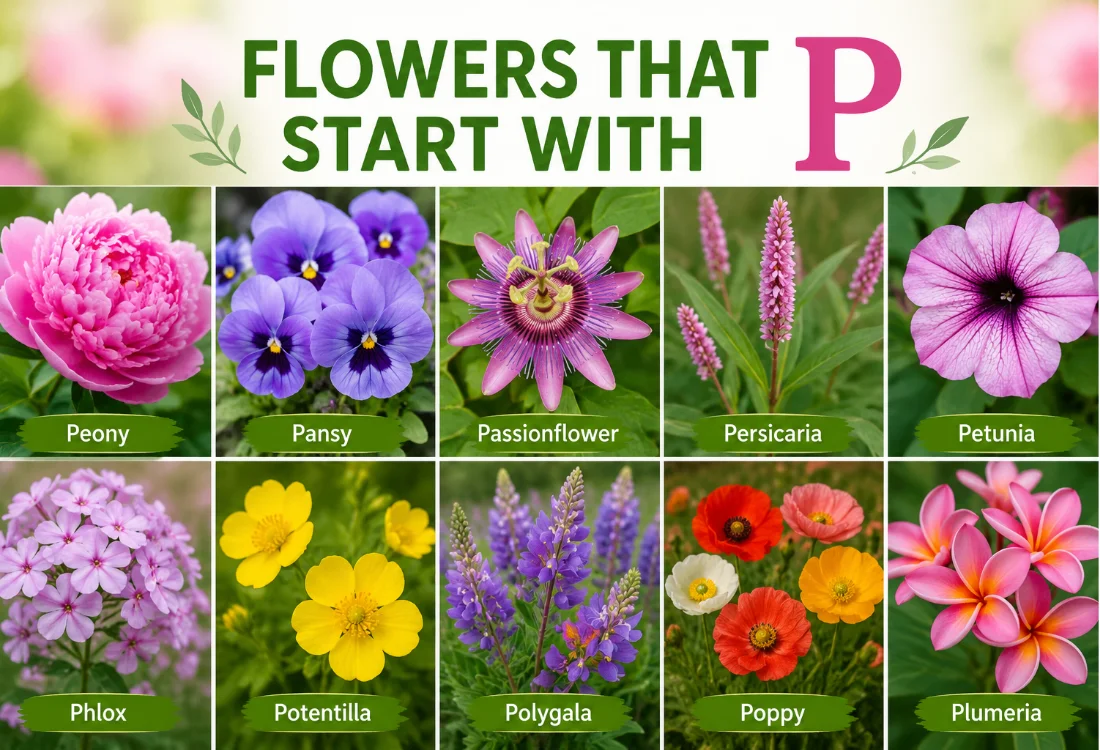
If you’re looking for flowers that start with p, you’ll find a wide variety of colorful, fragrant, and easy-to-grow plants suitable for different gardens and climates. From the cheerful Pansy and elegant Peony to the exotic Passion Flower and vibrant Petunia, these flowers offer unique beauty and practical landscaping benefits. Learning about flowers that start with p helps gardeners choose plants based on bloom time, growing conditions, maintenance needs, and visual appeal. Whether you’re creating a flower bed, attracting pollinators, or expanding your botanical knowledge, these flowers provide excellent options for every gardening style.
Many flowers beginning with the letter “P” are popular among home gardeners because they produce long-lasting blooms, adapt to different environments, and contribute to healthy ecosystems. Some thrive in full sun, while others prefer partial shade or moist soil conditions. Understanding their characteristics allows gardeners to create landscapes that remain colorful throughout multiple seasons.
| Flower | Botanical Name | Bloom Color | Sun Requirement | Growing Difficulty |
| Pansy | Viola × wittrockiana | Purple, yellow, blue, white | Full sun to partial shade | Easy |
| Peony | Paeonia | Pink, white, red, yellow | Full sun | Moderate |
| Petunia | Petunia | Multiple colors | Full sun | Easy |
| Passion Flower | Passiflora | Purple, white, blue | Full sun | Moderate |
| Primrose | Primula | Yellow, pink, purple | Partial shade | Easy |
| Phlox | Phlox | Pink, purple, white | Full sun | Easy |
Why Learn About Flowers That Start With P?
Exploring flowers that start with p is useful for gardeners, students, floral enthusiasts, and anyone interested in expanding their knowledge of ornamental plants. These flowers represent a diverse collection of annuals, perennials, vines, and wildflowers that grow in various climates around the world. Each species offers unique colors, fragrances, and growing habits that suit different landscaping purposes.
Knowing the characteristics of these flowers makes garden planning easier and more effective. You can select blooms based on flowering season, maintenance level, pollinator attraction, or decorative appeal. Whether your goal is creating vibrant flower beds or adding vertical interest with flowering vines, understanding these plants helps you make informed gardening decisions.
Pansy
Among the most recognizable flowers that start with p, the Pansy is admired for its cheerful appearance and remarkable color combinations. These cool-season flowers bloom in shades of purple, yellow, blue, orange, white, and even multicolored patterns. Their distinctive face-like petals make them a favorite choice for borders, containers, and window boxes.
Pansies perform best in cool temperatures and thrive in fertile, well-drained soil with regular watering. They bloom abundantly during spring and autumn in many regions, providing long-lasting color when many other flowers are dormant. Their compact growth habit also makes them ideal for small gardens and decorative planters.
Growing Conditions for Pansies
Pansies prefer locations receiving morning sunlight with some afternoon shade, especially in warmer climates. Regular watering keeps the soil evenly moist without becoming waterlogged, which helps maintain healthy blooms throughout the season. Applying balanced fertilizer every few weeks encourages continuous flowering.
Removing faded flowers, a process known as deadheading, promotes additional blooms and keeps plants looking tidy. Healthy air circulation also reduces the likelihood of fungal diseases during damp weather.
Uses in Garden Design
Pansies are versatile ornamental plants suitable for edging pathways, decorating patios, and filling gaps between larger flowering plants. Their compact size allows gardeners to create colorful displays without overwhelming surrounding vegetation.
Because they are available in numerous color combinations, pansies easily complement both formal and informal landscape designs. They also pair beautifully with ornamental cabbage, violas, and spring-flowering bulbs.
Peony
The Peony is widely considered one of the most elegant flowers that start with p, producing large, fragrant blossoms that symbolize prosperity, romance, and good fortune. These long-lived perennials can thrive for decades when planted in suitable conditions, making them valuable additions to ornamental gardens.
Peonies bloom primarily during late spring and early summer, producing spectacular flowers in shades of pink, white, red, coral, and yellow. Their lush foliage remains attractive long after the blooming season ends, adding structure and greenery to the landscape.
Planting and Care
Peonies require full sunlight and fertile, well-drained soil to develop healthy root systems and abundant flowers. Planting them too deeply may reduce blooming, so the crown should remain just below the soil surface according to regional recommendations.
Once established, peonies require relatively little maintenance beyond seasonal pruning and occasional fertilization. Supporting large flower heads with garden stakes helps prevent stems from bending after heavy rainfall.
Benefits of Growing Peonies
Besides their remarkable beauty, peonies are highly valued as cut flowers because their blooms last well in floral arrangements. Their pleasant fragrance also makes them popular choices for ornamental landscapes and wedding bouquets.
Since peonies are perennial plants, they return every year with minimal care, making them an economical investment for long-term garden beauty. Their resistance to many common pests further increases their popularity among home gardeners.
Petunia
Petunias remain one of the most widely grown flowers that start with p because they bloom continuously throughout the growing season. Available in nearly every imaginable color, these annual flowers brigstart part 2
hten gardens, hanging baskets, containers, and landscape borders with vibrant blossoms.
Modern petunia varieties produce abundant flowers from spring until the first frost when provided with adequate sunlight and regular care. Their trailing or upright growth habits make them suitable for numerous decorative applications around homes and public gardens.
Best Growing Conditions
Petunias perform best in full sun, where they receive at least six hours of direct sunlight each day. Well-drained soil enriched with organic matter supports vigorous growth and consistent blooming throughout the season.
Routine watering keeps plants healthy, although overwatering should be avoided to prevent root problems. Applying flowering fertilizer every few weeks helps maintain vibrant blooms and lush foliage.
Landscaping Applications
Petunias create colorful displays in flower beds, hanging baskets, patio containers, and window boxes. Their spreading varieties also function effectively as seasonal ground covers in sunny landscapes.
Because they bloom for extended periods, petunias provide reliable color during the warmer months without requiring complicated maintenance. Their wide range of flower sizes and colors allows gardeners to create customized planting combinations.
Passion Flower
Among the most unique flowers that start with p, the Passion Flower stands out because of its intricate floral structure and vigorous climbing habit. Native to many tropical and subtropical regions, this flowering vine produces striking blossoms featuring delicate filaments arranged around a central crown. Its unusual appearance makes it one of the most fascinating ornamental plants for garden enthusiasts.
Passion Flowers thrive when grown on trellises, fences, pergolas, or arbors where their climbing stems have adequate support. Besides producing beautiful flowers, several species also develop edible fruits, making them valuable additions to productive ornamental gardens.
Ideal Growing Environment
Passion Flowers flourish in full sun with fertile, well-drained soil that retains moderate moisture. Consistent watering during active growth encourages vigorous vines and abundant flowering without allowing roots to remain saturated.
Pruning during the dormant season helps control size while promoting healthy new growth for the following flowering period. Providing sturdy support structures also ensures the vines develop attractive vertical displays.
Primrose
Primrose is one of the earliest flowers that start with p, bringing vibrant color to gardens as winter fades into spring. These charming perennials produce clusters of blossoms in shades of yellow, pink, purple, white, red, and blue, making them excellent choices for borders and woodland gardens. Their cheerful appearance brightens landscapes when many other flowering plants have not yet begun blooming.
Primroses prefer cool temperatures and moist, well-drained soil enriched with organic matter. They thrive in partially shaded locations where they receive protection from intense afternoon sunlight. With proper care, these flowers return year after year and continue producing attractive blooms during the early growing season.
Growing Tips for Primrose
Regular watering helps primroses maintain healthy foliage and vibrant flowers, especially during dry periods. Applying mulch around the plants conserves soil moisture while reducing weed growth and protecting shallow roots. Removing faded flowers also encourages the plant to direct more energy into healthy development.
Although primroses are relatively easy to grow, avoiding waterlogged soil is essential for preventing root diseases. Occasional feeding with a balanced fertilizer supports continuous growth and improves flowering performance.
Garden Uses
Primroses work beautifully along pathways, beneath trees, and around ponds where partial shade naturally exists. Their compact growth habit also makes them excellent additions to containers and decorative window boxes. Mixing different flower colors creates attractive displays that remain visually appealing throughout spring.
These flowers also combine well with ferns, hostas, and other shade-loving plants. Their early blooms provide valuable nectar for bees and other beneficial pollinators emerging after winter.
Phlox
Phlox is another outstanding example of flowers that start with p, admired for its dense flower clusters and sweet fragrance. Depending on the variety, phlox may bloom from spring through late summer, producing colorful displays in pink, purple, white, red, and lavender. These flowers are especially popular in cottage gardens because they provide long-lasting beauty with relatively simple maintenance.
Many phlox varieties attract butterflies, hummingbirds, and bees, making them valuable additions to pollinator-friendly landscapes. Their vibrant blossoms also perform well as cut flowers, allowing gardeners to enjoy their beauty indoors.
Planting and Maintenance
Phlox grows best in fertile, well-drained soil that receives full sunlight for most of the day. Regular watering during hot weather helps maintain healthy foliage and supports abundant flowering throughout the growing season. Good air circulation around the plants reduces the risk of powdery mildew.
Dividing mature plants every few years improves overall health and encourages vigorous blooming. Removing spent flower clusters also extends the flowering season while keeping plants neat and attractive.
Landscaping Benefits
Tall garden phlox creates colorful backgrounds for flower beds, while creeping phlox forms attractive ground cover across slopes and rock gardens. Both varieties contribute texture, fragrance, and seasonal interest to residential landscapes. Their versatility allows gardeners to incorporate them into formal and naturalistic designs.
Phlox pairs well with coneflowers, daisies, ornamental grasses, and other summer-blooming perennials. Their colorful flowers create striking combinations that enhance the visual appeal of mixed garden borders.
Poppy
Poppy is one of the most iconic flowers that start with p, recognized for its delicate, paper-like petals and brilliant colors. These flowers bloom in shades of red, orange, pink, white, yellow, and purple, creating eye-catching displays in gardens and natural landscapes. Many gardeners appreciate poppies because they establish quickly and produce dramatic seasonal color.
Different poppy species thrive under various growing conditions, making them suitable for diverse climates and garden styles. Their graceful movement in the breeze adds softness and elegance to flower beds throughout the blooming season.
Ideal Growing Conditions
Poppies perform best in full sun with light, well-drained soil that allows roots to develop properly. Once established, many varieties tolerate drought remarkably well, making them suitable for low-maintenance landscapes. Overwatering should generally be avoided because excessively wet soil may damage the root system.
Direct sowing often produces better results than transplanting because poppies dislike root disturbance. Allowing some flowers to produce seed heads encourages natural reseeding for future growing seasons.
Why Gardeners Love Poppies
Poppies provide vibrant color while requiring relatively little maintenance after establishment. Their flowers attract bees and beneficial insects, supporting healthy garden ecosystems throughout spring and summer. Seed pods also add ornamental interest after flowering has ended.
These flowers combine beautifully with ornamental grasses and other wildflower species. Their natural appearance makes them excellent choices for meadow gardens and informal landscape designs.
Periwinkle
Periwinkle is a versatile ground-cover plant that deserves recognition among flowers that start with p because of its attractive evergreen foliage and delicate blue, purple, or white blossoms. This hardy plant spreads steadily across the ground, helping suppress weeds while covering bare soil with lush greenery.
Because of its vigorous growth, periwinkle is commonly used on slopes, beneath trees, and in difficult landscape areas where grass struggles to grow. Its evergreen leaves continue providing visual interest even when flowers are not in bloom.
Care Requirements
Periwinkle grows successfully in both partial shade and full shade, although it can tolerate moderate sunlight in cooler climates. Moist, well-drained soil encourages healthy growth, especially during the establishment period. Once mature, the plant becomes relatively drought tolerant.
Occasional trimming helps control spreading and maintains a neat appearance throughout the growing season. Removing damaged stems also encourages fresh growth and improves overall plant health.
Landscape Applications
Gardeners frequently use periwinkle to stabilize slopes, edge pathways, and fill shaded garden beds. Its dense growth reduces erosion while creating an attractive carpet of foliage and seasonal flowers. The plant also works well beneath larger shrubs and ornamental trees.
Periwinkle’s low-maintenance nature makes it especially valuable for homeowners seeking attractive landscaping with minimal upkeep. Its evergreen foliage ensures year-round coverage in many climates.
Penstemon
Penstemon, commonly known as beardtongue, is another excellent addition to the list of flowers that start with p. This perennial produces tall spikes of tubular flowers in shades of purple, pink, red, blue, and white, attracting hummingbirds, butterflies, and bees throughout the blooming season. Its upright growth habit adds height and structure to flower beds.
Penstemon performs exceptionally well in sunny gardens where good drainage is available. Many species tolerate drought once established, making them suitable for water-wise landscapes and native plant gardens.
Growing Penstemon Successfully
Full sun encourages the strongest flowering performance and healthiest plant growth. Well-drained soil is particularly important because excessive moisture may lead to root problems during colder months. Light pruning after flowering helps maintain an attractive appearance.
Avoid applying excessive fertilizer because overly rich soil may encourage leafy growth at the expense of flowers. Moderate care usually produces healthier plants with stronger stems and longer-lasting blooms.
Benefits in Pollinator Gardens
Penstemon flowers provide valuable nectar for hummingbirds, bees, and butterflies, making them important contributors to pollinator-friendly landscapes. Their extended blooming season supports beneficial insects when many other plants have finished flowering.
These flowers combine effectively with lavender, salvia, echinacea, and ornamental grasses. Together, they create colorful gardens filled with wildlife activity throughout the growing season.
Frequently Asked Questions
1. What are the most popular flowers that start with P?
Some of the most popular flowers that start with P include Pansy, Peony, Petunia, Poppy, Primrose, Phlox, Passion Flower, Periwinkle, Penstemon, and Portulaca.
2. Which flowers that start with P are easiest to grow?
Petunias, Pansies, Primroses, Phlox, and Portulaca are among the easiest flowers to grow because they require minimal maintenance and adapt well to many garden conditions.
3. Are there any perennial flowers that start with P?
Yes, several perennial flowers that start with P include Peony, Phlox, Penstemon, Primrose, and Periwinkle. These plants return each year with proper care and suitable growing conditions.
4. Which flowers that start with P attract pollinators?
Flowers such as Penstemon, Phlox, Passion Flower, Poppy, and Primrose attract bees, butterflies, and hummingbirds by providing nectar and supporting a healthy garden ecosystem.
5. Can flowers that start with P be grown in containers?
Yes, many flowers that start with P, including Petunias, Pansies, Primroses, and Portulaca, grow well in containers when provided with proper sunlight, drainage, and regular watering.